Modern Inventory Management Systems Explained
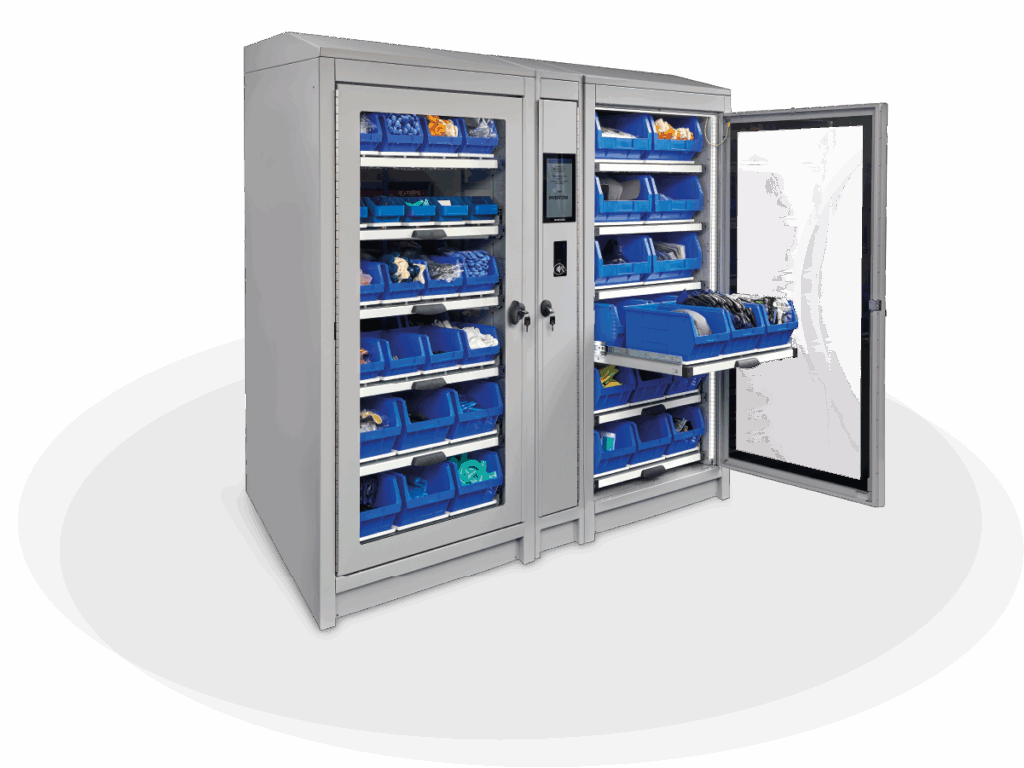
Modern inventory management systems give you real-time control over stock, usage, and replenishment, eliminating manual processes, reducing waste, and preventing costly stockouts.
In industrial environments, this means knowing exactly:
- What stock you hold
- Where it is
- Who is using it
- When it needs replacing
— without relying on spreadsheets, manual counts, or delayed reporting.
| In short: modern systems combine point-of-use hardware (like vending machines and smart bins) with cloud software to automate stock control, reduce PPE and consumable spend, and improve operational efficiency across every site. |
Who This Guide For
This guide is designed for:
- Operations managers responsible for stock control and site efficiency
- Procurement teams managing PPE and consumable spend
- Facilities and H&S leaders accountable for compliance and audit trails
- Distributors delivering vendor-managed inventory (VMI) services
If your organisation relies on manual stores, spreadsheets, or periodic stock counts, this page will help you understand what a modern alternative looks like, and whether it is worth implementing.
Why Traditional Inventory Management Fails at Scale
Most businesses don’t choose inefficient inventory processes, they inherit them.
A simple spreadsheet or manned storeroom gets harder to control as operations grow. It’s rarely one big failure, it’s small inefficiencies building up over time.
The key issue is this: Traditional inventory systems are reactive. Modern systems are predictive.
That difference is what drives cost, waste, and operational risk.
| Problem | What It Costs You |
| Manual data entry errors | Inaccurate stock counts, missed replenishments, production stoppages |
| No real-time visibility | Over-ordering, holding excess stock, inflated carrying costs |
| Uncontrolled access to stores | Pilferage, incorrect item usage, stock taken without being recorded |
| Monthly reporting cycles | Behaviour problems identified weeks too late to act on |
| Store manned for limited hours | Operators without access to PPE or materials during night shifts |
| Cycle counts before ordering | Storeman time wasted; replenishment decisions delayed |
These are not edge cases they are the default state for many UK manufacturers and facilities managers. The good news is that each of these failure points has a direct technology solution.
The Digital Transformation of Inventory Management
Digital inventory management replaces reactive, paper-based processes with automated, data-driven control. The shift has three core dimensions:
1. Real-Time Visibility
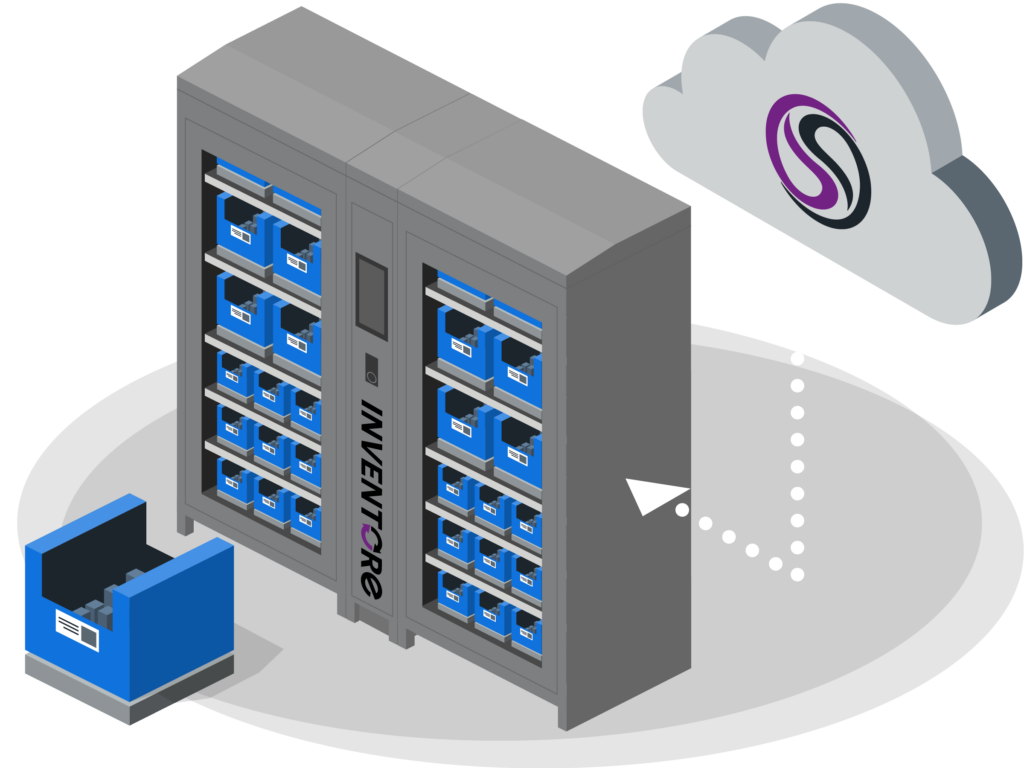
Cloud-based platforms such as Sourcerer provide a live view of stock levels, usage patterns, and replenishment needs across every site, van, and storeroom, accessible from any internet-enabled device. No waiting for month-end reports. No manual counts before placing orders.
2. Automated Replenishment
When stock reaches a defined threshold (whether measured by weight, scan, or transaction count) the system triggers a replenishment order automatically. This eliminates the need for cycle counts and removes the risk of stockouts caused by slow or manual ordering processes.
3. User-Level Access Control
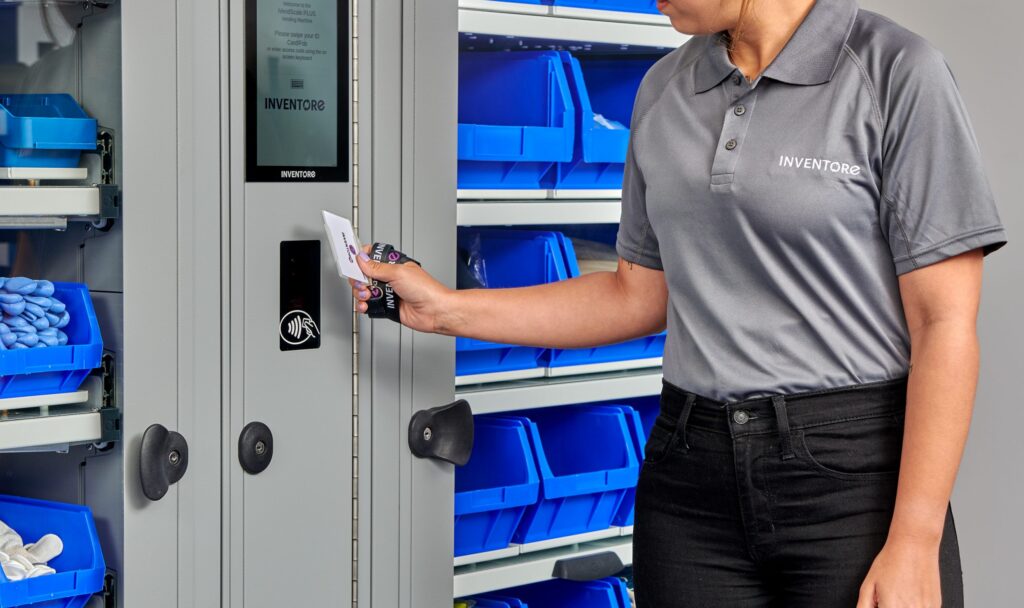
Point-of-use dispensing means only authorised users can access stock — and only the right items, in the right amounts. Every transaction is logged automatically: user, item, quantity, date and time. No paperwork needed.
| Key Stat: iNVENTORe customers in automotive manufacturing have achieved a 34% reduction in PPE spend in year one, primarily by using real-time usage data to identify and correct anomalous behaviour within 30 days of deployment. |
When a Modern Inventory Management System May Not Be Necessary
Not every operation needs a fully automated inventory system.
You may not see significant ROI if:
- Stock volumes are low and stable
- Access is already tightly controlled
- Manual processes are consistent and low-risk
- There is minimal variation in usage patterns
However, once any of the following apply:
- Multiple sites or distributed stores
- High PPE or consumable spend
- Lack of visibility across teams
- Frequent stockouts or over-ordering
– the case for automation becomes significantly stronger.
Key Technologies in a Modern Inventory Management System
A well-designed IMS is not a single product. It is an integrated stack of hardware and software components. Here is how the main technologies work together:
| Technology | What It Does | Best For |
| Industrial Vending Machines (iVendScale, iVendLocker, iVendSecure) | Dispenses PPE, consumables, and MRO items on demand, 24/7, with user authentication and automatic transaction logging | Factories, manufacturing sites, maintenance operations |
| Smart Bins & Scale Sensors (iBinScale, iVendScale) | Uses weight sensing to monitor stock levels continuously and trigger replenishment orders automatically | High-turnover fasteners, consumables, and small parts |
| Asset Tracking (Smartie) | Bluetooth-enabled tags track the location and status of tools and assets in real time | Tools, equipment, returnable items |
| Van Stock Management (SmartVan) | Manages inventory across a mobile fleet, ensuring each vehicle carries optimised stock levels | Field service, utilities, housing maintenance |
| Storeroom Management (SmartStores, SmartStores Secure) | Provides enterprise-level control over storeroom material usage with access controls and real-time visibility | Central stores, multi-site operations |
| Cloud IMS Platform (Sourcerer) | Consolidates all hardware data into one dashboard: live stock levels, usage reports, automated replenishment, ERP integration | All environments; the connective layer across all hardware |
How to Improve Inventory Management Efficiency: 6 Practical Steps
Step 1: Map Your Current Waste
Before implementing any technology, audit your existing process. Identify: where stock is held, who has access, how usage is recorded, how replenishment decisions are made, and where losses are occurring. This baseline is essential for calculating ROI after implementation.
Step 2: Move PPE and Consumables to Point-of-Use
Centralised stores require operators to travel to collect items. Distributed vending machines place stock where it is needed: on the shopfloor, in each building, beside each workstation. This reduces walk-around time, improves access during night shifts, and removes the need for stores staff to man a hatch.
Step 3: Implement User-Level Controls
Unrestricted access to stores is one of the biggest drivers of inventory waste. Configure dispensing systems so each user can only access what they’re authorised to use, in the right quantities for their role and you eliminate overage at the source.
iNVENTORe customers have reported complete elimination of excess usage within the first 30 days of deployment.
Step 4: Replace Manual Reporting with Real-Time Data
Monthly reporting is too slow to change behaviour. Real-time dashboards allow purchasing managers to identify anomalous usage the same day it occurs and act on it. This data also drives smarter procurement: orders are placed based on actual consumption, not estimates.
Step 5: Automate Replenishment
Demand-led replenishment triggered by real usage data rather than periodic cycle counts keeps stock available without over-ordering. Automated purchase orders reduce purchasing workload and eliminate the manual effort of checking stock before placing orders.
Step 6: Integrate With Your ERP or MRP System
A modern IMS should not operate in isolation. Integration with existing ERP or MRP systems ensures inventory data flows seamlessly into financial, procurement, and production planning processes, eliminating double data entry and giving a single source of truth across the organisation.
Sustainable Inventory Management: Reducing Waste Beyond the Balance Sheet
Inventory waste is not only a financial problem, it is an environmental one. Overstocking consumes energy and storage space. Excess PPE consumption means more materials manufactured, packaged, and eventually disposed of. Poor replenishment practices create emergency deliveries, unnecessary vehicle journeys, and avoidable emissions.
Modern inventory management systems address sustainability at an operational level, not as an add-on, but as a direct consequence of tighter control.
Eliminating Overstock and Product Waste
Demand-led replenishment means stock is ordered based on actual consumption, not estimates. Solutions like iBinScale use weight-sensing technology to monitor stock levels continuously, triggering orders only when genuinely needed. The result is less dead stock, fewer write-offs, and a significant reduction in the volume of materials that are ordered, stored, and ultimately discarded unused.
Optimising Logistics and Reducing Transport Emissions
Accurate, real-time stock data allows businesses to plan replenishment schedules more efficiently, consolidating deliveries and eliminating emergency shipments driven by stockouts that could have been predicted. For mobile workforces using SmartVan, operatives can check stock across the entire vehicle fleet before travelling to a merchant, cutting unnecessary journeys and the fuel costs and emissions that come with them.
Reducing PPE Consumption Through Usage Control
Uncontrolled PPE access is one of the biggest sources of avoidable waste in manufacturing. When operators can take whatever they want, whenever they want, they take more than they actually need. Point-of-use dispensing systems restrict access to the correct items, in the correct quantities, for each authorised user, eliminating the excess that accumulates invisibly under manual systems.
Supporting Reusable and Sustainable Product Adoption
Manual storerooms create social friction around reusable products. In one of our case studies, the storemen report that operators routinely refused laundered gloves, insisting on new ones every time. When PPE is dispensed by a machine rather than a person, that friction disappears.
The system determines what is available; operators simply collect it. iNVENTORe has successfully facilitated laundered glove programmes in environments where manual distribution had previously failed to gain acceptance.
Building the Audit Trail Sustainability Reporting Requires
As ESG reporting requirements grow, businesses need traceable data on consumption, waste and compliance. A digital inventory system gives you that automatically — a complete, timestamped record of every item, by every user, at every location.
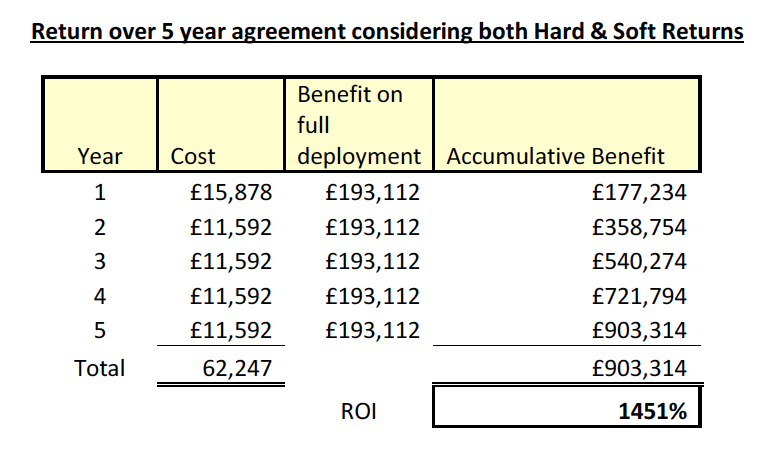
What ROI Can You Expect From a Modern Inventory Management System?
Return on investment from an IMS implementation falls into two categories: hard cost savings (directly measurable) and soft cost savings (time-based and risk-related).
Hard Cost Savings
| Savings Category | Typical Driver |
| Reduced PPE and consumable spend | Usage controls, product range rationalisation, elimination of pilferage |
| Lower procurement costs | Automated replenishment replaces emergency orders and manual purchasing effort |
| Reduced stores labour | Storeman time freed from issuing stock at a hatch |
| Elimination of stock write-offs | Real-time data prevents overstocking of slow-moving or expiring items |
Soft Cost Savings
| Savings Category | Typical Driver |
| Operator walk-around time | Point-of-use machines reduce travel to central stores |
| Management reporting time | Automated dashboards replace manual KPI compilation |
| Litigation risk reduction | Full PPE audit trail reduces exposure; typical compensation settlement costs £50,000+ |
| Improved first-time fix rates | Field operatives carry optimised stock; fewer return-to-base journeys |
| Five-year projections based on year-one savings consistently demonstrate compelling payback timelines. Contact us today to request a site-specific ROI model. |
Ready to Modernise Your Inventory Management?
iNVENTORe has been designing and deploying point-of-use inventory management solutions since 2001, with patents in some of the most innovative technology in the sector. From a single vending machine to a full enterprise rollout across every site and vehicle, our systems are built to deliver the cost savings and efficiency gains outlined above — fast to implement, and proven in real industrial environments.


Frequently Asked Questions
What is the difference between an inventory management system and a warehouse management system?
A warehouse management system (WMS) is primarily concerned with the movement and storage of goods within a warehouse, picking, packing, and despatch. An inventory management system focuses on tracking stock levels, controlling usage, and automating replenishment. In industrial and manufacturing environments, an IMS typically operates at the point of use — on the shopfloor, in vans, or in storerooms — rather than in a fulfilment warehouse.
Can an inventory management system integrate with my existing ERP or MRP software?
Yes. Sourcerer, Inventor-e’s cloud-based IMS platform, is designed to integrate with existing ERP and MRP systems, eliminating double data entry and ensuring inventory data flows into procurement, finance, and production planning processes automatically.
What industries benefit most from automated inventory management?
Automated inventory management delivers measurable results across automotive manufacturing, aerospace and aviation, healthcare and NHS facilities, petrochemicals, social housing maintenance, and any operation running a mobile workforce or multi-site storeroom network. The common thread is environments where manual processes are creating cost, compliance risk, or operational downtime.